Gymnastics Skills For The Open At Our Gym:
Where These Skills Fit Into Our Fitness Classes
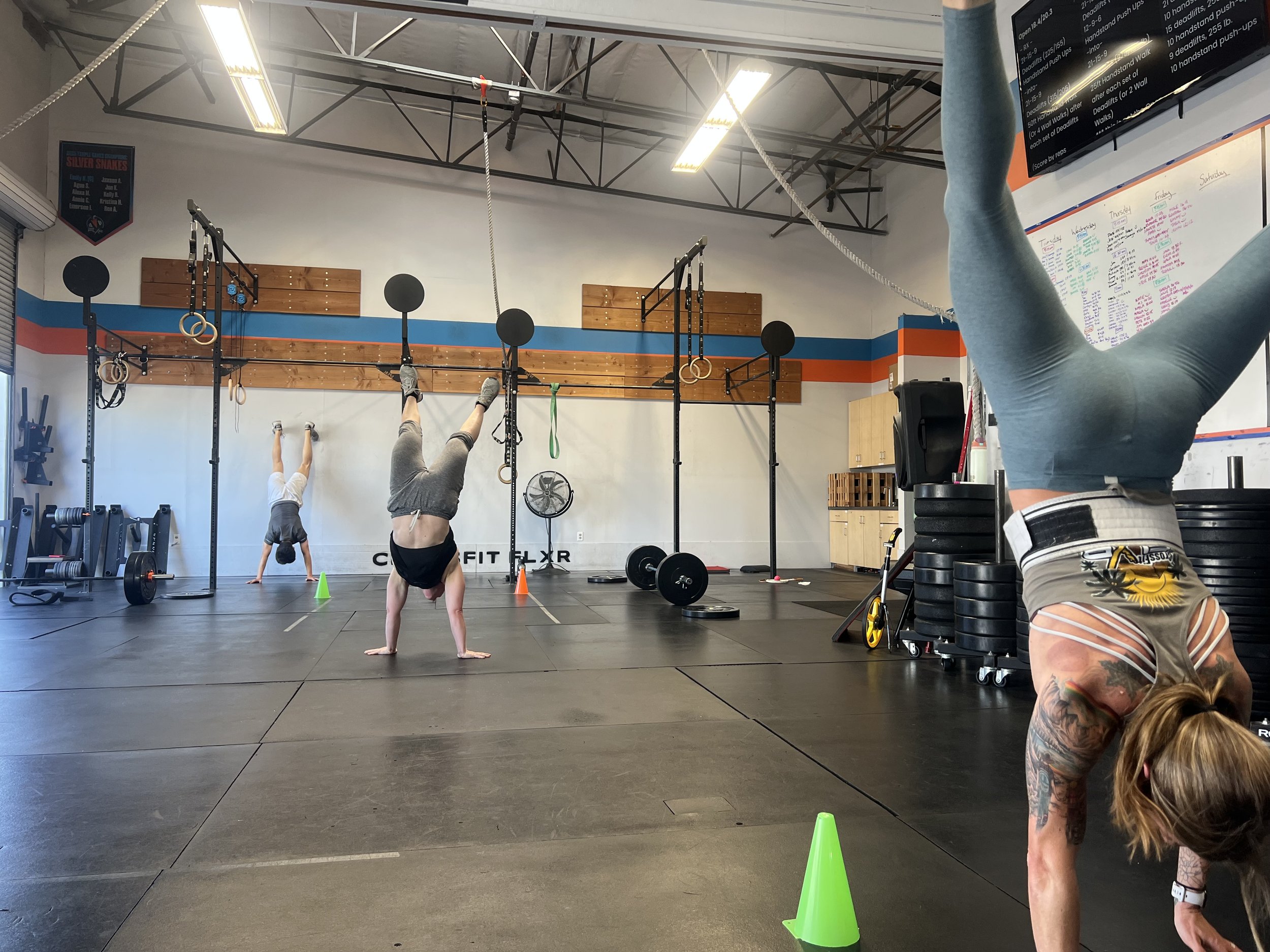
Gymnastics movements play a major role in the CrossFit Open every single year. From pull-ups and toes-to-bar to handstand push-ups and double-unders, these skills often challenge athletes both physically and mentally. They test not only strength and coordination, but also stamina, grip endurance, and the ability to stay composed when fatigue sets in.
The good news is that gymnastics success in the Open doesn’t require chasing brand-new skills in the final weeks before competition. In fact, trying to force new movements at the last minute often leads to frustration or injury. Instead, meaningful improvements come from refining efficiency, building confidence, and learning how to manage fatigue. Small adjustments in technique and pacing can lead to big gains on the leaderboard and a more enjoyable Open experience overall.
Focus on Fundamentals
Every gymnastics movement in CrossFit is built on a foundation of solid fundamentals. Hollow and arch positions, shoulder stability, grip strength, and midline control all transfer across multiple skills; from pull-ups and toes-to-bar to handstand work and kipping movements.
Spending time on strict strength is one of the most effective ways to improve gymnastics performance. Strict pull-ups, strict handstand push-ups, controlled negatives, and slow core work help build strength that supports efficient movement when intensity increases. These exercises may feel less exciting than high-rep workouts, but they create long-term progress and resilience.
Controlled kip swings and positional drills are equally important. Practicing smooth, connected movement helps reduce wasted energy and prevents excessive strain on the shoulders and lower back. When fundamentals are strong, athletes are better equipped to maintain technique even when breathing hard and under pressure.
Practice Efficiency Over Volume
In the CrossFit Open, it’s rarely about how many reps you can perform when you’re fresh. Instead, success is determined by how well you move when tired. Practicing efficiency allows you to stay consistent across rounds, sets, and weeks of competition.
Rather than focusing on max-rep sets or pushing to failure, prioritize repeatable, sustainable sets with short, intentional rest periods. This approach teaches you how to manage fatigue while maintaining good movement quality.
Pay attention to transitions, breathing patterns, and hand placement. Small efficiencies, such as minimizing setup time or controlling your descent, can save energy and add up significantly over the course of a workout. Finding a steady rhythm early helps prevent burnout later.
Build Capacity in Common Open Movements
The Open follows predictable gymnastics patterns. Pull-ups, chest-to-bar pull-ups, toes-to-bar, handstand push-ups, double-unders, and box jump variations appear year after year. Spending extra time building capacity in these movements pays off when they show up in challenging combinations.
This doesn’t mean doing excessive volume, but rather practicing them consistently in manageable doses. Gradual exposure helps improve stamina while reducing the risk of overuse injuries. Confidence grows when movements feel familiar rather than intimidating.
Have a Scaling Strategy
Choosing the right version of a movement is not a sign of weakness; it’s a sign of smart preparation. Before the Open begins, decide which movements you plan to perform at Rx, scaled, or modified levels based on your current abilities.
Having a clear scaling strategy removes uncertainty and stress on workout day. Instead of making decisions in the heat of the moment, you can focus fully on execution, pacing, and effort. The goal of the Open is to keep moving safely and efficiently from start to finish, not to struggle through movements that stall progress.
Working with a coach to establish this plan can help ensure that your choices align with your goals and long-term development.
Grip and Shoulder Care
Gymnastics movements place heavy demands on the grip, forearms, and shoulders, especially when workouts include high-volume pulling or hanging exercises. Taking care of these areas is essential for staying healthy throughout the Open.
Incorporate regular mobility work, banded exercises, and thorough warm-ups to prepare joints and connective tissue for training. Light accessory work focused on scapular control, rotator cuff strength, and forearm recovery can go a long way in preventing overuse issues.
Listening to your body is key. Addressing small aches or tightness early can prevent them from becoming bigger setbacks as the Open progresses week to week.
Train the Mental Side of Gymnastics
Gymnastics movements often carry a mental component, especially when athletes have struggled with certain skills in the past. Building confidence through consistent practice, positive self-talk, and realistic expectations can help shift mindset during competition.
Training under light pressure, such as timed sets or workout simulations, can help prepare you mentally for Open conditions. The more comfortable you feel performing these movements in a competitive environment, the more confident you’ll be when it counts.
Final Thoughts
Gymnastics success in the CrossFit Open comes down to efficiency, preparation, and smart decision-making. By focusing on fundamentals, prioritizing repeatable sets, caring for your body, and having a clear plan, you set yourself up for consistent performances.
When you trust the skills you’ve built and move with intention, gymnastics becomes an opportunity to showcase your fitness, not something to fear.
